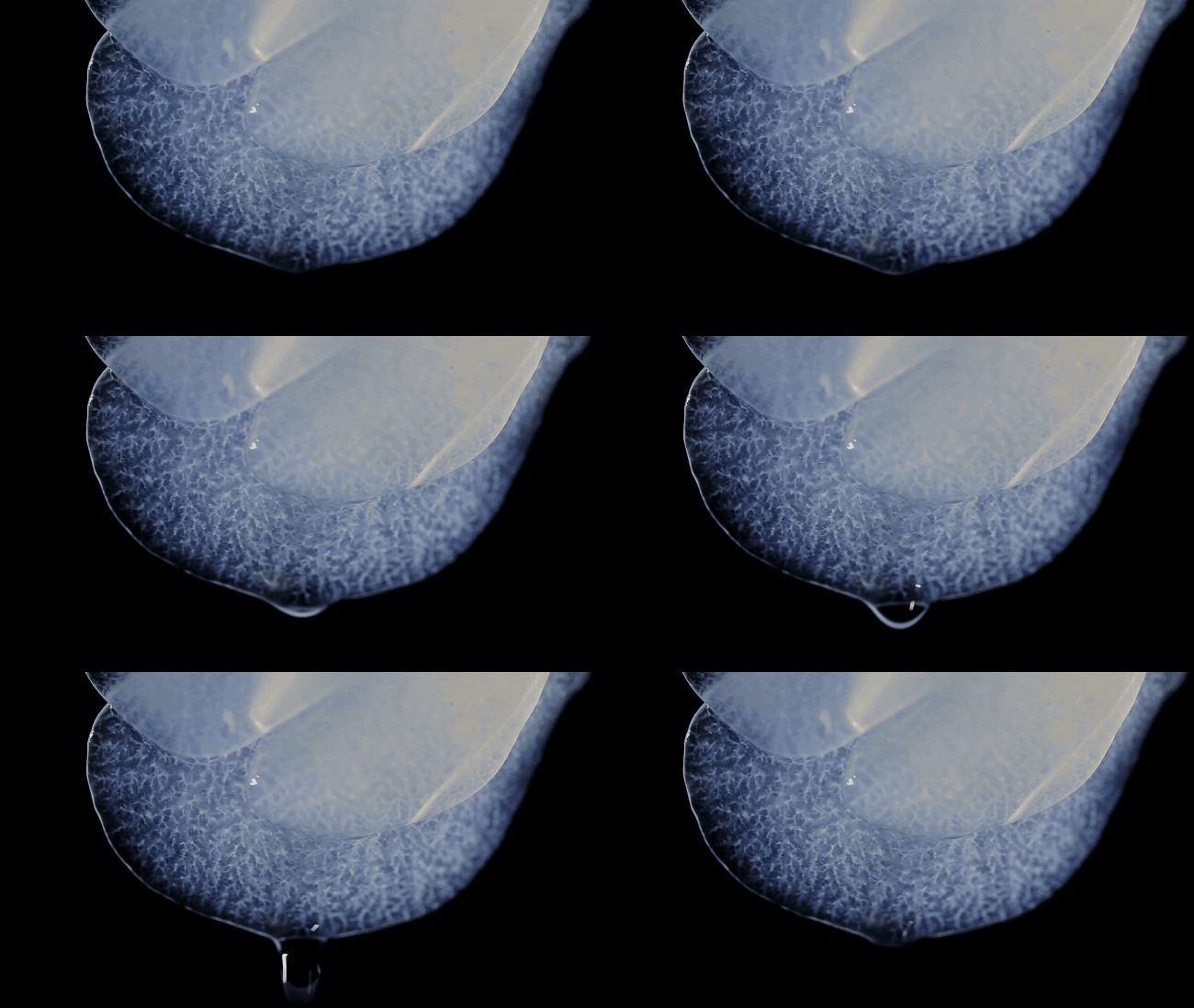
Lipocalin-2 modulates recipients alloimmune responses to the murine kidney transplants.
Stacks Image 32408
"Lipocalin-2 modulates recipients alloimmune responses to the murine kidney transplants." was published by A.M. Pfefferkorn , R. Fritsche-Guenther, A. Kusch, H. Schwelberger, S. Liu, R. Klopfleisch, Y. Li, R. Catar, S. Liu, F. Aigner, J. Pratschke, I.M. Sauer, and M.I. Ashraf in the December Issue of Frontiers in Immunology 2025.

This study investigated the mechanisms behind the renoprotective effects of recombinant Lipocalin-2 (rLcn2) in kidney transplantation (KTx). Lipocalin-2 is known as an early biomarker for acute kidney injury, delayed graft function, and transplant rejection. Using a mouse kidney transplant model, researchers examined how rLcn2 affects immune responses after transplantation.
Treatment with rLcn2 (Lcn2:Siderophore:Fe³⁺ complex) significantly reduced T-cell activation and frequency, particularly effector memory T cells and their cytotoxic (CD8⁺) and helper (CD4⁺) subsets, in graft tissue, lymphoid organs, and blood by postoperative day 7. In graft-infiltrating CD8⁺ T cells, rLcn2 also reduced cytotoxic activity, including lower degranulation capacity and decreased interferon-γ and perforin expression, as well as fewer NKG2D⁺ activated cytotoxic T cells. Effects on innate immune cells were limited and selective, affecting only some neutrophils, macrophages, and NK cell subsets.
Importantly, rLcn2 did not influence inflammation or tissue injury in syngeneic (non-alloimmune) transplants, indicating that its protective effect is primarily through modulation of adaptive immune responses, particularly T-cell activity.
Overall, the findings suggest that rLcn2 improves kidney graft outcomes by selectively suppressing alloimmune T-cell responses rather than altering non-immune injury pathways.
Privacy preserving federated learning for 90-day mortality prediction in colorectal surgery
Stacks Image 32390
M.M. Maurer, B. Pfitzner, R.P. van de Water, L. Faraj, C. Riepe, D. Zuluaga, F. Krenzien, N. Raschzok, R. Siegel, C. Schineis, B. Arnrich, K. Beyer, J. Pratschke, I.M. Sauer, and A. Winter evaluated federated learning (FL) as a privacy-preserving approach for AI-based prediction of 90-day mortality after colorectal surgery. Limited data sharing between hospitals often restricts surgical AI development, and FL allows multicenter model training without transferring raw patient data. The study also assessed the effect of differential privacy (DP) on model performance.
Data from 2,959 patients undergoing elective colorectal surgery at three tertiary centers (2015–2021) were analyzed. Neural networks were trained locally at each center, using centralized data aggregation and distributed federated learning. Additional privacy protection was implemented using central and local differential privacy.
Results showed that federated learning performed similarly to centralized modeling, achieving comparable predictive accuracy (AUROC ~0.78 vs. 0.81). However, adding differential privacy reduced performance, with central DP causing moderate declines and local DP nearly eliminating predictive accuracy. Across models, the most influential predictors were patient age, blood parameters, and the Charlson Comorbidity Index.
Overall, the study demonstrates that federated learning can enable effective multicenter surgical AI models while preserving data privacy, though strong privacy mechanisms like differential privacy may significantly compromise model performance.

"Privacy preserving federated learning for 90-day mortality prediction in colorectal surgery: a multicenter retrospective development and comparison study" is available in International Journal of Surgery 2025;111(12):9065-9074
Prototype of a Virtual Reality Simulator for Thyroidectomy: A Proof of Concept.
Stacks Image 32372
The anatomical complexity of the thyroid region presents significant challenges in surgical training, particularly regarding the identification and preservation of the recurrent laryngeal nerve and parathyroid glands. We present a prototype of a virtual reality simulator designed to support thyroidectomy training by enabling the immersive, interactive exploration of CT-derived, deformable anatomical models in a photorealistic operating room environment. Structures not detectable in CT, such as nerves and glands, were manually integrated. The simulator was evaluated qualitatively by three surgeons using a structured questionnaire. Feedback indicated high usability, visual realism, and potential for improving anatomical recognition skills. Limitations include the absence of instrument interaction, haptic feedback, and full procedural simulation. This prototype demonstrates feasibility and outlines a clear development roadmap toward a high-fidelity, scalable training platform for endocrine surgery.

The paper "Prototype of a Virtual Reality Simulator for Thyroidectomy: A Proof of Concept." by K. Eisentraeger, E.M. Dobrindt, M. Queisner, C. Remde, I.M. Sauer, J. Pratschke, M. Mogl, F. Butz, and C. Müller-Debus was published in Cureus Journal of Medical Science. 2025;17(9):e92724
Lipocalin-2 Restores Soluble Guanylyl Cyclase-Dependent Dilation of the Afferent Arteriole After Renal Transplantation or Ex Vivo Hypoxia/Reoxygenation in Mice
Stacks Image 32349
L. Zhao, M. Xu, A.M. Pfefferkorn, C. Erdogan, H. Schwelberger, P. Wang, P.H. Khedkar, M. Eigen, F.B. Lichtenberger, R. Catar, E.Y. Lai, F. Aigner, P.B. Persson, I.M. Sauer, A. Patzak, and M.I. Ashraf published the paper "Lipocalin-2 Restores Soluble Guanylyl Cyclase-Dependent Dilation of the Afferent Arteriole After Renal Transplantation or Ex Vivo Hypoxia/Reoxygenation in Mice" in Acta Physiologica 2025;241(8): e70077.

This study investigated whether iron-bound lipocalin-2 (holo-rLcn2) can restore soluble guanylyl cyclase (sGC)-mediated microvascular dilation in the kidney after hypoxia/reoxygenation (H/R) and kidney transplantation. Microvascular dysfunction is a key factor in ischemia/reperfusion injury, and sGC activators like cinaciguat lose efficacy after severe hypoxia.
Using isolated mouse afferent arterioles (AAs) and ex vivo kidney perfusion, the researchers tested vascular dilation following H/R and syngeneic kidney transplantation with short (30 min) or prolonged (5.5 h) cold ischemia.
  • Key findings include:
  • H/R impaired AA dilation, which was preserved by holo-rLcn2 but not by iron-free apo-rLcn2.
  • The protective effect of holo-rLcn2 was iron-dependent, as it was reversed by the iron chelator deferoxamine.
  • Kidney transplants exhibited reduced AA dilation, particularly after prolonged ischemia, but holo-rLcn2 treatment restored dilation to levels seen with shorter ischemia.
  • Ex vivo kidney perfusion confirmed that holo-rLcn2 enhanced cinaciguat-induced vascular relaxation at the organ level.
Overall, the study identifies a novel role for iron-bound rLcn2 in preserving renal vascular function after ischemic injury and transplantation, likely by maintaining iron-dependent vascular mechanisms.
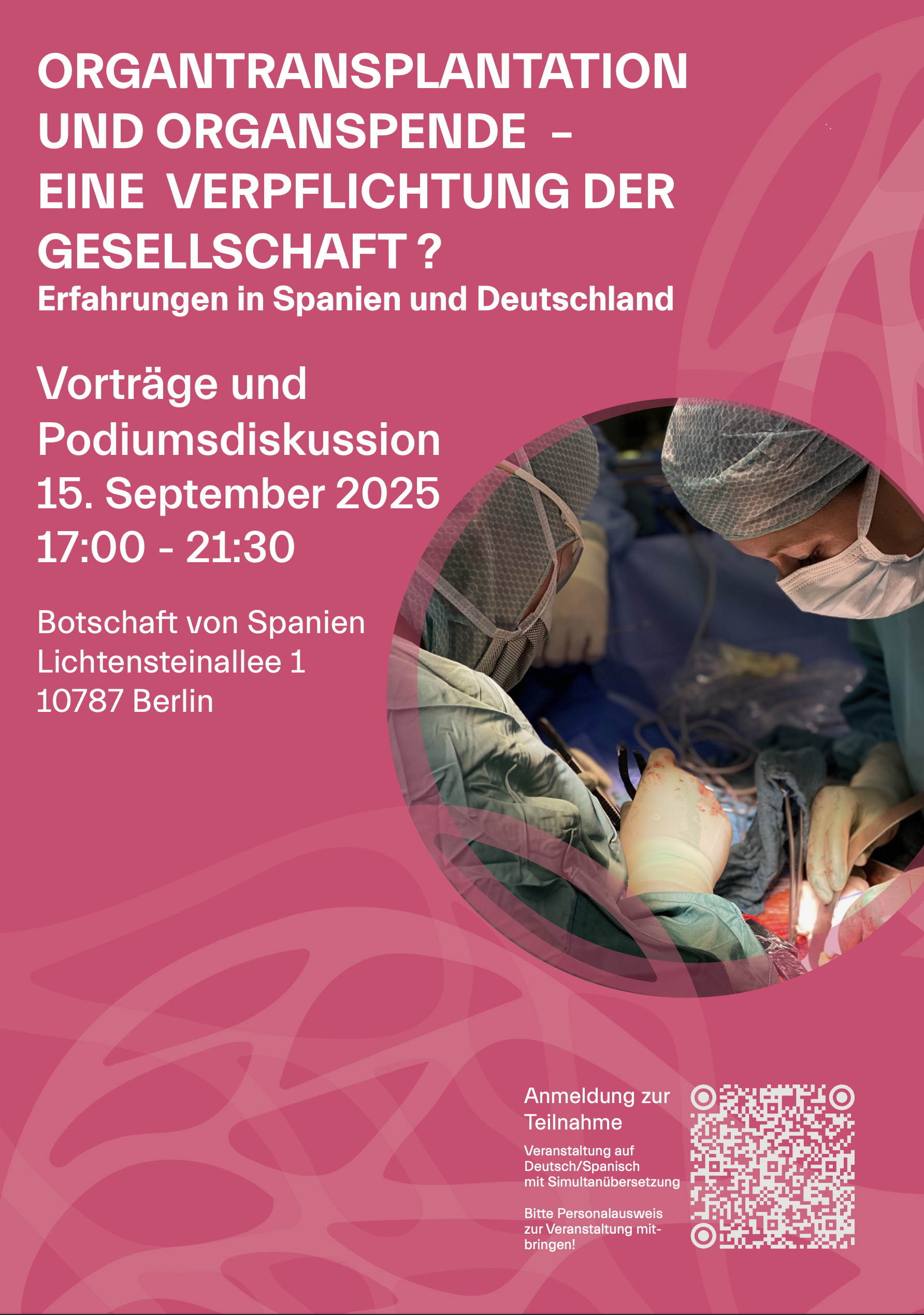
Organ Transplantation and Organ Donation – A Social Responsibility? Experiences in Spain and Germany
Stacks Image 32328

Organ Transplantation and Organ Donation – A Social Responsibility?
Experiences in Spain and Germany

Monday, September 15, 2025, 5:30 – 9:30 p.m.
Embajada de España | Embassy of Spain
Lichtensteinallee 1, 10787 Berlin

Organ transplantation is the therapy of choice for end-stage organ failure. Despite its life-saving potential, this therapy is not available to all patients in Germany, as a lack of willingness to donate has led to a shortage of organs. Together with the Embassy of Spain in Berlin, we would like to explore this topic further. By examining the different experiences of Spain and Germany—two European countries with very different approaches to organ donation—we aim to discuss opportunities, challenges, and possible ways to increase donation willingness. Experts in organ transplantation from both countries will highlight differences and engage in discussion with the audience.

We look forward to welcoming:
Dr. Beatriz Domínguez-Gil, Director of the Spanish Transplant Organization (ONT),
Dr. Luis Rodríguez-Bachiller Villaronga, Gregorio Marañón University Hospital,
Dr. Alberto Sandiumenge Camps, Vall d’Hebrón University Hospital
Franziska Bleis, Patient Ambassador,
Dr. Axel Rahmel, Medical Director of the German Foundation for Organ Transplantation,
Dr. Dr. Sandra Loder, Managing Physician, German Foundation for Organ Transplantation, and
Prof. Dr. Johann Pratschke, Director of the Department of Surgery, Charité.
The event will be moderated by Christian Maier.

The event takes place within the framework of the special exhibition “Vessels: Infrastructures of Life” of the Berliner Medizinhistorisches Museum and Experimental Surgery | Charité, in cooperation with the Cluster of Excellence “Matters of Activity” at Humboldt University of Berlin, as part of the __matter Festival 2025. We gratefully acknowledge the generous support of Stiftung Charité.

Please register for the event here.
ARTE documentary features Project Neo|Pancreas and Ersielda Keshi

The number of people needing donor organs continues to grow — but there simply aren't enough to meet demand. Could the future of transplant medicine lie in the laboratory? This arte documentary offers a fascinating look at the latest breakthroughs in artificial organs and artificial hearts, with insights from Germany, Japan, and Sweden.
The documentary “A Heart on Demand?” by Marcus Fitsch explores one of modern medicine’s most urgent challenges: How can we overcome the shortage of donor organs?

The film follows groundbreaking research projects in Germany, Japan, and Sweden — including work at Berlin’s Charité and Japan’s renowned Riken Institute. Scientists there aren’t just modifying existing organs — they’re creating them entirely in the lab, custom-built and in scalable quantities. From miniature kidneys grown from stem cells to liver cells tested in animal models, and even the vision of a fully functional artificial heart, the documentary dives deep into the innovations shaping the future. Ethical questions are also front and center: What does it mean to manufacture human organs? And just how close are we to a true revolution in transplant medicine?

This is a rich, informative, and visually striking documentary that reveals how science and technology are coming together to redefine the future of healthcare.
New Book: Virtual participation, real involvement – Transformative technologies for a more inclusive society
Stacks Image 32269
Virtual reality (VR) and augmented reality (AR) are among the fastest-growing technologies of the 21st century. They also open up enormous opportunities for social integration: through cultural and educational offerings, through networked digital interaction spaces, or as a means of promoting citizen participation. The contributions in this volume present a wide range of application scenarios for VR and AR in the fields of education, health and public space. They demonstrate in a practical way how society, but also companies, can benefit from expanding their technological skills and taking diversity aspects into account. After all, genuine participation is only possible through a sustainable, transdisciplinary and citizen science approach.

Our book chapter ‘Human-Centred Design of Mixed Reality Applications in Medical Education – GreifbAR’ is now available in open access. Authors are Robert Luzsa, Moritz Queisner, Christopher Remde, Igor Sauer, Nadia Robertini and Susanne Mayr.

As part of the BMBF-funded project ‘Tangible Reality – Skilful Interaction of User Hands and Fingers with Real Tools in Mixed Reality Worlds’, we investigated how XR technology can be integrated into medical education. The chapter presents an interdisciplinary, XR-based training system for surgical knot tying. It describes key design principles and experiences from development and evaluation. In addition, it proposes a model for the human-centred design of comparable training applications that can also support other projects.

Opening Exhibition | »Vessels. Infrastructures of Life«
Stacks Image 28095

We warmly invite you to the opening of »Vessels. Infrastructures of Life« at the Berlin Museum of Medical History at the Charité (bmm), a group exhibition curated by Igor M. Sauer and Navena Widulin with contributions by Assal Daneshgar, Emile de Visscher, Frédéric Eyl, Karl Hillebrandt, Eriselda Keshi, Dietrich Polenz, Moritz Queisner, Iva Rešetar and Igor M. Sauer.

Vernissage
Wed, 4 June 2025, 7:00 - 10:00 pm

Exhibition
5 June – 12 October 2025 Tue, Thu, Fri, Sun, 10:00 am - 5:00 pm Wed, Sat, 10:00 am - 7:00 pm Closed on Mondays

Venue
Berliner Medizinhistorisches Museum der Charité (bmm) Virchowweg 17 10117 Berlin

What do plants, animals, humans and cities have in common? They all have vascular systems and, therefore, an infrastructure without which they would not be able to survive.

In the human body, arteries and veins move the blood together with the heart. Plants have a finely branched vascular system for the transport of water and nutrients. And cities utilize an underground network of pipelines that supply clean water and remove wastewater. The temporary exhibition, co-curated by Igor Sauer and Navena Widulin, shows how these vessels function and how they can be visualized, used and reproduced.

What can medicine learn from these natural and technical supply systems? What role does the interdisciplinary view – between biology, design, materials research and medical technology – play for regenerative medicine? And what innovative approaches can be derived from this for the development of artificial and bioartificial donor organs?

»Vessels. Infrastructures of Life« provides insights into the work of designers, material scientists and surgical researchers who are working together on solutions for the future – inspired by nature, technology and the logic of living systems. From exhibits on transplantation and regenerative medicine to examples of architecture and design, the exhibition offers exciting insights into these often-hidden structures. The objects on display correspond with those in Rudolf Virchow’s historical collection of specimens. A particular focus lies on the connections between natural vessels and human-made networks, such as the regulation of temperature in buildings or the water and wastewater supply in cities.

The temporary exhibition »Vessels. Infrastructures of Life« is a collaboration between the Berlin Museum of Medical History and the Experimental Surgery at the Charité and the Cluster of Excellence »Matters of Activity« of Humboldt-Universität zu Berlin as part of the  _matter Festival 2025.
90-Day Mortality Prediction in Elective Visceral Surgery Using Machine Learning
Stacks Image 28103
Our paper, "90-Day Mortality Prediction in Elective Visceral Surgery Using Machine Learning: A Retrospective Multicenter Development, Validation, and Comparison Study" has been published online ahead of print in the International Journal of Surgery.
Authors are C. Riepe, R. van de Water, A. Winter, B. Pfitzner, L. Faraj, R. Ahlborn, M. Schulze, D. Zuluaga, C. Schineis, K. Beyer, J. Pratschke, B. Arnrich, I.M. Sauer, and M.M. Maurer

Machine Learning (ML) is increasingly being adopted in biomedical research, however, its potential for outcome prediction in visceral surgery remains uncertain. This study compares the potential of ML methods for preoperative 90-day mortality (90DM) prediction of an aggregated multi-organ approach to conventional scoring systems and individual organ models.

This retrospective cohort study enrolled patients undergoing major elective visceral surgery between 2014 and 2022 across two tertiary centers. Multiple ML models for preoperative 90DM prediction were trained, externally validated and benchmarked against the American Society of Anesthesiologists (ASA) score and revised Charlson Comorbidity Index (rCCI). Areas under the receiver operating characteristic (AUROC) and precision recall curves (AUPRC) including standard deviations were calculated. Additionally, individual models for esophageal, gastric, intestinal, liver, and pancreatic surgery were developed and compared to an aggregated approach. A total of 7,711 cases encompassing 78 features were included. Overall 90DM was 4% (n = 309). An XBoost classifier demonstrated the best performance and high robustness following external validation (AUROC: 0.86 [0.01]; AUPRC: 0.2 [0.04]). All models outperformed the ASA score (AUROC: 0.72; AUPRC: 0.08) and rCCI (AUROC: 0.81; AUPRC: 0.11). rCCI, patient age and C-reactive protein emerged as most decisive model weights. Models for gastric (AUROC: 0.88 [0.13]; AUPRC: 0.24 [0.26]) and intestinal surgery (AUROC: 0.87 [0.05]; AUPRC: 0.17 [0.09]) revealed the highest organ-specific performances, while pancreatic surgery yielded the lowest results (AUROC: 0.66 [0.08]; AUPRC: 0.22 [0.12]). A combined multi-organ approach (AUROC: 0.84 [0.04]; AUPRC: 0.21 [0.06]) demonstrated superiority over the weighted average across all organ-specific models (AUROC: 0.82 [0.07]; AUPRC: 0.2 [0.13]).

ML offers robust preoperative risk stratification for 90DM in elective visceral surgery. Leveraging training across multi-organ cohorts may improve accuracy and robustness compared to organ-specific models. Prospective studies are needed to confirm the potential of ML in surgical outcome prediction.
Michael Tummings | Human Insights
Stacks Image 28109
Michael TummingsArtist in Residence @ Experimental Surgery – has released his latest book, Human Insights.

In this powerful work, Tummings turns his lens toward the operating theatre, capturing intimate moments of surgical intervention. His photographs explore the human body not as an object of clinical analysis, but as a site of vulnerability, resilience, and transformation. As noted by Jörg Christian Tonn, Tummings' work "reveals the mysteries of the body," offering entirely new perspectives on physical existence and the role of modern medicine.

With the consent of both patients and surgical teams of several university hospitals, Tummings was granted rare access to document procedures involving organ implants and artificial prostheses. The resulting imagery bridges the worlds of art and science, bringing us face-to-face with the beauty of the human body—beyond the rational and dissecting eye.

Human Insights invites viewers to reconsider how we see ourselves and our bodies, especially in moments of repair and healing.
Dr. Agnes Böhm
Stacks Image 28117
Today Agnes Klara Böhm successfully defended her doctoral thesis entitled "Multidimensional analysis of different decellularization methods for diaphragmatic extracellular matrices in a murine model" summa cum laude!

Congratulations !
_matter Festival 2025


Stacks Image 28127


Matter shapes our existence, although we tend to forget about its activity in everyday life. The _matter Festival 2025 shines a new light on material agencies.
We invite you to explore exhibitions, workshops and debates at 12 venues across Berlin.
Discover the program spanning from April to October here!

The special exhibition »Gefäße – Infrastrukturen des Lebens« (Vessels – Infrastructures of Life) at the Berliner Medizinhistorisches Museum shows how these vessels function and how they can be visualized, used and reproduced. From exhibits on transplantation and regenerative medicine to examples of architecture and design, the exhibition offers exciting insights into these often hidden structures. Surgical procedures in general and transplant surgery, in particular, are inconceivable without the consideration of macro- and microscopic vessels. Vascular structures also play a central role in the field of regenerative medicine and tissue engineering. The exhibits correspond with those in Virchow’s collection of specimens. A particular focus lies on the connections between natural vessels and human-made networks, such as the regulation of temperature in buildings or the water and wastewater supply in cities.

Team Credits
Curation: Igor Sauer & Navena Widulin
Coordination: Sophia Gräfe
Production and Design: Julia Blumenthal
Contributors: Assal Daneshgar, Emile De Visscher, Frédéric Eyl, Eriselda Keshi, Moritz Queisner, Iva Rešetar and Igor Sauer

Dates
Vernissage: Wed, 4 June 2025, 7:00–10:00 pm
Exhibition: 5 June–12 October 2025
Opening Hours:
Tue, Thu, Fri, Sun: 10:00 am–5:00 pm
Wed, Sat: 10:00 am–7:00 pm

Public Program
28 June 2025, 7:00–8:00 pm
Lecture Hall Ruin
Vessels. Infrastructures of Life – Presentation as Part of the Lange Nacht der Wissenschaften 2025 (language: German)
Lecture Program and Guided Tours: Details tbc
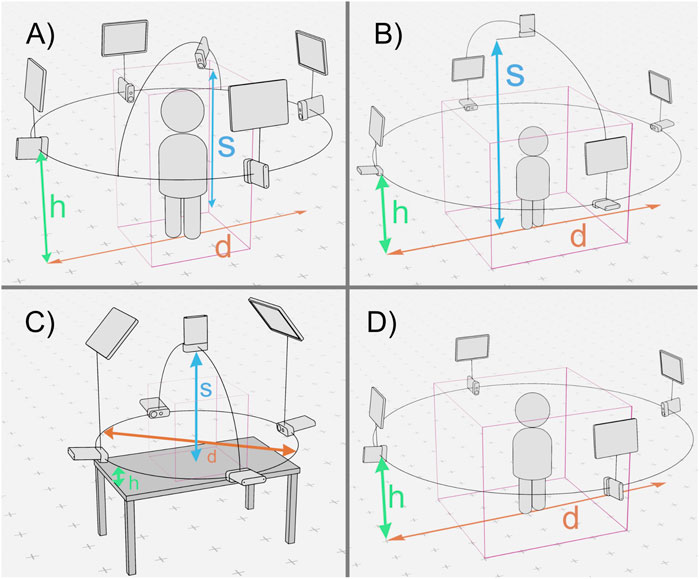
Sparse camera volumetric video applications
The paper "Sparse camera volumetric video applications. A comparison of visual fidelity, user experience, and adaptability" is available open access in Frontiers in Signal Processing.
Authors are Christopher Remde, Igor M. Sauer, and Moritz Queisner.

Volumetric video production in commercial studios is predominantly produced using a multi-view stereo process that relies on a high two-digit number of cameras to capture a scene. Due to the hardware requirements and associated processing costs, this workflow is resource-intensive and expensive, making it unattainable for creators and researchers with smaller budgets. Low-cost volumetric video systems using RGBD cameras offer an affordable alternative. As these small, mobile systems are a relatively new technology, the available software applications vary in terms of workflow and image quality. In this paper we provide an overview of the technical capabilities of sparse camera volumetric video capture applications and assess their visual fidelity and workflow.

We selected volumetric video applications that are publicly available, support capture with multiple Microsoft Azure Kinect cameras and run on consumer-grade computer hardware. We compared the features, usability, and workflow of each application and benchmarked them in five different scenarios. Based on the benchmark footage, we analyzed spatial calibration accuracy, artifact occurrence and conducted a subjective perception study with 19 participants from a game design study program to assess the visual fidelity of the captures.

We evaluated three applications, Depthkit Studio, LiveScan3D and VolumetricCapture. We found Depthkit Studio to provide the best experience for novel users, while LiveScan3D and VolumetricCapture require advanced technical knowledge to be operated. The footage captured by Depthkit Studio showed the least amount of artifacts by a larger margin, followed by LiveScan3D and VolumetricCapture. These findings were confirmed by the participants who preferred Depthkit Studio over LiveScan3D and VolumetricCapture. Based on the results, we recommend Depthkit Studio for the highest fidelity captures. LiveScan3D produces footage of only acceptable fidelity but is the only candidate that is available as open-source software. We therefore recommend it as a platform for research and experimentation. Due to the lower fidelity and high setup complexity, we recommend VolumetricCapture only for specific use-cases where its ability to handle a high number of sensors in a large capture volume is required.
Stacks Image 28139
Gender-based variations in surgical management of colorectal liver metastases
Stacks Image 28144
BMC Cancer published the paper "Gender-based variations in surgical management of colorectal liver metastases: comprehensive analysis". Authors are Pia F. Koch, Kristina Ludwig, Karl H. Hillebrandt, Hannes Freitag, Moritz Blank, Sebastian Knitter, Dominik P. Modest, Felix Krenzien, Georg Lurje, Wenzel Schöning, Johann Pratschke, Igor M. Sauer, Simon Moosburner, and Nathanael Raschzok.

Colorectal cancer with liver metastasis affects both men and women. However, therapeutic strategies and long-term outcomes could be influenced by patients' sex, due to variations in tumour biology, lifestyle, and dietary habits. By conducting a comprehensive comparative analysis, this study aims to detail differences in tumour characteristics, postoperative complications, recurrence rates, and survival outcomes between sexes.
We performed a Single-centre retrospective analysis between 2010 and 2022 of all patients undergoing liver surgery for colorectal liver metastases (CRLM) at the Department of Surgery, Charité- Universitätsmedizin Berlin. Patients were stratified by sex. Statistical analysis was performed using RV4.2.We analysed 642 patients who underwent hepatic resections for CRLM. Baseline patient characteristics were comparable between sexes: However, significant differences (p < 0.001) were noted in body mass index (BMI), with females exhibiting lower BMIs (median BMI in females: 23.7 kg/m² vs. males: 26.5 kg/m²). Primary tumour locations varied significantly (p = 0.008), with females presenting more sigmoid colon tumours (37%), while males predominantly had rectal tumours (35%). RAS mutation rates were higher in females (54%) than males (34%, p = 0.005). A higher prevalence of bilobar metastases were evident in men (62%, p = 0.011), yet surgical techniques and complications showed comparable distributions. The time for resection was longer in males (median 304 min vs. 290 min in females); however, conversion to open surgery took place more often in females (5.2% vs. 2.3% in males). Postoperative complications and survival rates showed no significant differences by patients' sex.
Distinct sex-related patterns in tumour characteristics and postoperative outcomes in patients with CRLM were observed, emphasizing the need for further investigations to understand and address gender-based disparities for more personalized clinical management in the future.

The paper is available open access here.

Cytokine-armed vaccinia virus promotes cytotoxicity towards pancreatic carcinoma cells
Stacks Image 28154
The manuscript "Cytokine-armed vaccinia virus promotes cytotoxicity towards pancreatic carcinoma cells via activation of human intermediary CD56dimCD16dim natural killer cells" by Ruonan Wang, Mengwen Hu, Isis Lozzi, Cao Z.J. Jin, Dou Ma, Katrin Splith, Jörg Mengwasser, Vincent Wolf, Linda Feldbrügge, Peter Tang, Lea Timmermann, Karl H. Hillebrandt, Marieluise Kirchner, Philipp Mertins, Georg Hilfenhaus, Christopher Neumann, Thomas Kammertoens, Johann Pratschke, Thomas Malinka, Igor Sauer, Elfriede Nössner, Zhongsheng Guo and Matthäus Felsenstein is available open access in the International Journal of Cancer.
 
Pancreatic ductal adenocarcinoma (PDAC) remains a particularly aggressive disease with few effective treatments. The PDAC tumor immune microenvironment (TIME) is known to be immune suppressive. Oncolytic viruses can increase tumor immunogenicity via immunogenic cell death(ICD). We focused on tumor-selective (vvDD) and cytokine-armed Western-Reserve vaccinia viruses (vvDD-IL2, vvDD-IL15) and infected carcinoma cell lines as well as patient-derived primary PDAC cells. In co-culture experiments, we investigated the cytotoxic response and the activation of human natural killer cells (NK). Infection and virus replication were assessed by measuring virus encoded YFP. We then analyzed intracellular signaling processes and oncolysis via in-depth proteomic analysis, immunoblotting and TUNEL assay. Following the co-culture of mock or virus infected carcinoma cell lines with allogenic PBMCs or NK cell lines, CD56+ NK cells were analyzed with respect to their activation, cytotoxicity and effector function. Both, dose- and time-dependent release of danger signals following infection was assayed. Viruses effectively entered PDAC cells and emitted YFP signals. Infection resulted in concomitant oncolysis. The proteome showed reprogramming of normally active core signaling pathways in PDAC occurred(e.g. MAPK-ERK signaling). Danger-associated molecular patterns were released upon infection and stimulated co-cultured NK cells for enhanced effector cytotoxicity. NK cell subtyping revealed enhanced numbers and activation of a rare CD56dimCD16dim population. Tumor cell killing was primarily triggered via Fas ligands rather than granule release, resulting in marked apoptosis. Cytokine-armed vaccinia viruses induced NK cell activation and enhanced cytotoxicity towards human PDAC cells in vitro. The cytokine-armed virus targets the carcinoma cells with great potential to modulate the TIME in PDAC.
 Page 1 / 1 
Year
© 2025 Prof. Dr. Igor M. Sauer | Charité - Universitätsmedizin Berlin | Disclaimer

This website or its third-party tools use cookies, which are necessary to its functioning and required to achieve the purpose illustrated in the Disclaimer. By closing this banner, scrolling this page, clicking a link or continuing to browse otherwise, you agree to the use of cookies.